We Decided to Start Trying
by Kassandra Vilchis
She murmurs. This girl I met only hours ago
is sharing intimate details about her sex life
with her husband. I turn my gaze,
as if I am a vintage radio straining
to catch the faint, distant echoes of her declaration.
Us girls are chatting in a dim hotel room in Boston
taking turns sharing the mirrors
in the bathroom and the small hallway leading
to the two queen-sized beds.
I want to say we are trying as well and that it may not be
as easy as she thinks. I recite in my head
the ways we have tried. We slept together only during
the full moon, placed a pillow under my hips,
marked the calendar with hearts, so many hearts
and I ate pineapple until I could no longer
stomach its sweetness. I placed our hopes
in timing and avoided caffeine
as if it were a forbidden potion.
I push down the silent resentful rage
building inside me like a simmering pot
and pass her a Kleenex to adjust her eyeliner.
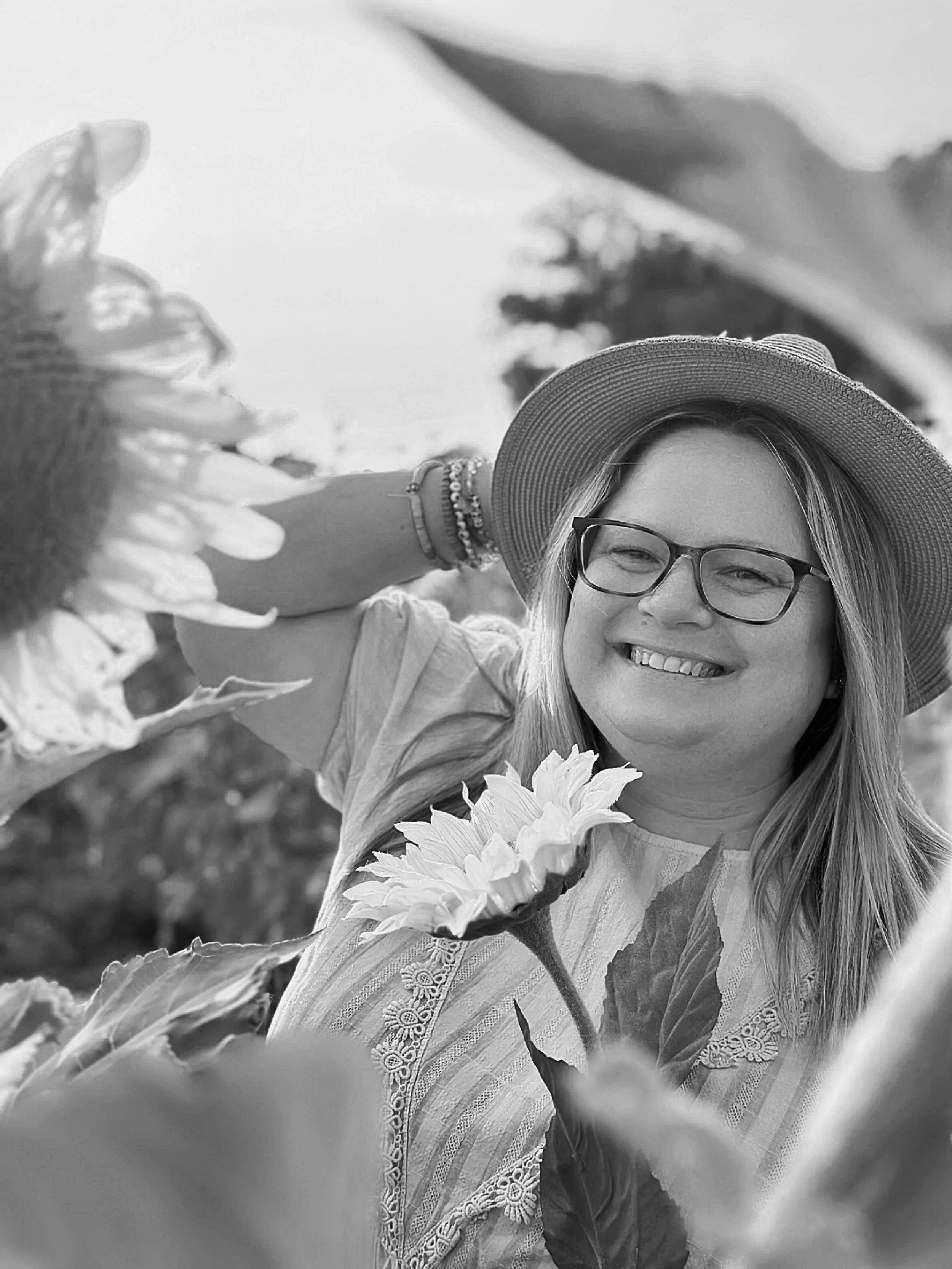
Kassandra Vilchis is a poet based in Minnesota. Her work thoughtfully examines themes of grief, womanhood, and generational relationships. She was recently short-listed for the Central Avenue Poetry Prize. Her writing appears in Bending Genres Journal, Rowayat, Roots & Ruins anthology and the Upon Learning anthology. Outside of writing, she spends time with her dog, Thor, and is dramatically lactose intolerant.
An Interview with Kassandra Vilchis
by Wesley Hazelberg
Wesley Hazelberg (B&G Intern): How did you first begin writing creatively?
Kassandra Vilchis: My earliest creative writing started in childhood, when I would make little books out of the stories I wrote. I drew pictures to match each scene, convinced that every tale needed its own world. I was a big Mary‑Kate & Ashley Olsen fan, which meant many of my stories involved detectives solving mysteries or young girls planning elaborate parties.
I’ve always been drawn to storytelling. In college and for nearly a decade afterward, I wrote short films, directed music videos, and worked on film and television sets.
Maybe that’s why so many of my poems lean toward narrative. I love the traditional sweep of a story—beginning, middle, end—and the emotional depth and vivid imagery that a narrative poem can hold.
WH: What are some of your biggest inspirations?
KV: My biggest inspirations in the creative-verse are Greta Gerwig, Sharon Olds, Alison Espach, Sierra DeMudler, and Nancy Meyers.
WH: What was the writing process like for “We Decided to Start Trying”? Additionally, how did it feel to write it?
KV: I write mostly from experience and memory. This poem grew out of an interaction I had on a weekend trip with a group of girls. Two of them I barely knew, but we were sharing a hotel room because we were all attending the same event. When I began drafting the poem, I could feel myself back in that room—sharing the curling iron, talking through our plans for the night, the easy warmth of getting ready together.
I wrote the poem three years ago, and I remember realizing that the conversation had to begin in the title. It felt like the first act, the moment that brings both reader and speaker into the same room. That’s still one of my favorite things about the piece: the way it starts mid‑conversation, inviting you to slip into the girl talk as if you were always meant to be there.
WH: My favorite stanza of your poem is the last. The readers are lifted from the poem at the same time as the speaker departs her train of thought and focuses back on the reality in front of her. I think it’s the perfect ending. How do you know when a piece is finished? Do you have any tips for knowing when to put down the pen?
KV: For this piece, I wanted the ending to show how complex womanhood and relationships can be. The speaker doesn’t really know the other girl, but she’s listening—and the jealousy she feels isn’t about the girl herself. It’s about the ease with which she talks about trying for a child, the effortlessness the speaker longs for. When you’re trying for a baby, it can feel isolating, and hearing someone speak so casually forces the speaker to reckon with everything she’s been carrying.
I also knew the poem needed an open‑ended ending because we’re dropping in mid‑conversation. That unfinished quality mirrors the uncertainty of the moment. A helpful question to ask yourself is: what do youwant from the poem? What do you want the reader to walk away with? What understanding or feeling are you trying to land? Once you can answer those, the right ending usually reveals itself.
WH: What is something you hope audiences take away from your poem?
KV: For me, this poem is a grief poem. I hope the reader feels understood. Grief is complicated and comes in many forms. The speaker longs for a life that does not exist but still wants to support another. I hope there is someone out there who can feel a space for themselves within this poem.
WH: What sort of projects are next for you as a writer?
KV: I just completed my first chapbook, Lisfranc, about my recovery from Lisfranc (mid-foot) surgery. I did not think I would be writing during the early days of my recovery but I surprised myself by writing through the strange and intimate landscape of recovery. I am currently submitting to chapbook contests and presses. I hope it resonates and helps others feel less alone in long recoveries like this one.
Additionally, I am finishing my full-length manuscript about inherited rituals that shape grief, womanhood, and generational memory. If you liked this poem, you would love my manuscript.