80 mph Free and Weightless
by Joshua Forehand
I’m three years old, maybe four. We’re living in a shitty prefabricated rental in a dust-coated West Texas trailer park. I chase horny toads and lizards all day. Mom’s behavior is getting strange and more erratic. She sleeps a lot. I’m old enough to know something is wrong.
I’m up early, in the living room watching cartoons. Dad’s at work and everyone else is asleep. I’m hungry. There's no cereal in the pantry, so I endeavor to wake her up. Approaching the bed, in the dark, shuttered bedroom, I slide my left hand under her pillow and shake her gently with the other. My left hand feels something burnished and cold. Like a snake underfoot, I’m hardwired to recognize this object right away and instinctively draw my hand back–it is the jagged bite and tapered end of a serrated knife. My mother stirs and opens her eyes. Her eyes are not her own. I feel dread for the first time.
*
I’m sitting behind the wheel of my Aunt Kathy’s ‘74 Monte Carlo. I’m in her lap, “driving.”
[This is a rescue memory. I’ve been instructed to conjure up a moment that brings serenity or joy when I feel overwhelmed.]
I’m speeding down the highway at 80 mph laughing my little ass off. All sensation of dread is drawn out the window like cigarette smoke. I’m free and weightless.
[Warm sunlight angles through the windows of my therapist’s office. I’m 46. This is my first experience with EMDR—Eye Movement Desensitization and Reprocessing. In each hand, I hold a pastel green orb, like an Easter egg, that vibrates alternately, stimulating each side of my brain. My therapist asks me to drop back into the memory.]
*
I’m back in the wood-paneled trailer house in search of some breakfast. Mom rises from bed and absently fixes a pot of Malt-O-Meal, served with a dollop of Country Crock and a cereal spoon of sugar. She returns to her bedroom without a word and closes the door. I stir the warm mush, mixing it carefully to leave a narrow ring of melted margarine around the edge of the bowl. Just the way I like it. I sit in front of the TV and watch cartoons as I eat.
[The green plastic eggs continue buzzing in my hands. Suddenly, a visceral wave of excitement washes over me.]
My Aunt Kathy is coming for a visit today. She’s young and fun and looks like Crystal Gayle, with her long black hair, shiny and straight. And she’s got a funny laugh. She laughs a lot and calls me Banana Face. I feel better when she’s around.
We go to a nearby park. I have a clinically significant amount of energy and I’m pinballing between the slides, swings, and the monkey bars. I’m taken by a sudden notion, as kids are, to take off running into a field. I venture a bit too far and get a sticker in my foot. I cry out for my mom. She tells me to come back to the park, but I’m frozen, unwilling to take a step, for fear the grass burr may penetrate further. Mom decides to come get me and deftly extracts the sticker from my heel. Then she takes off her slipper and begins to spank me. It’s a soft slipper, so it doesn’t hurt much, but she doesn’t stop. I wasn’t sure what I had done. I cry harder, not from pain but from fear. Her eyes are different. She continues swatting at my backside until my Aunt Kathy catches up and shouts her name. Mom comes to. Aunt Kathy comforts me as my mom repositions the slipper on her foot, turns, and walks away without a word. She continues walking down the road and out of sight. She returns to the trailer house. There, Mom slides back under the covers, feeling for the knife under her pillow, never more certain she’ll soon have reason to use it.
That very same afternoon, I’m sitting behind the wheel of the ‘74 Monte Carlo, in Aunt Kathy’s lap. My sister and I are going to spend a few days at her place; I don’t really understand why and I don’t care. I’m speeding down the highway at 80 mph–free and weightless–laughing my little ass off.
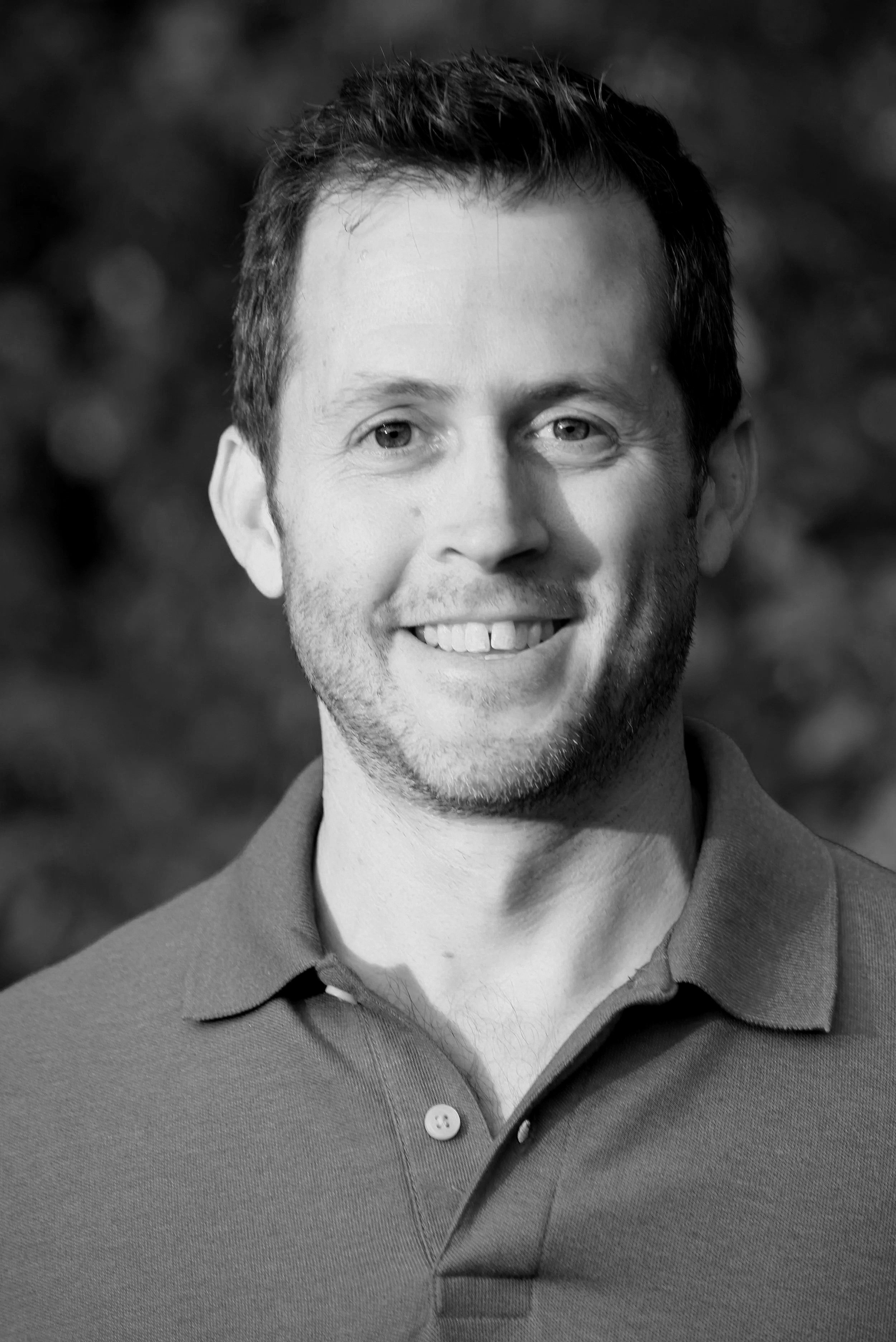
Joshua Forehand grew up in a small Texas town, with mostly happy memories, despite the specter of mental illness in the home. Writing has been a constant in his life since childhood–an escape, a travel companion, an emotional pocket-translator. His work has been published in multiple print and online journals, including a recent selection for the Editor’s Prize in Nonfiction by Porter House Review. He was a 2025 Honor Winner for the Edwin “Bud” Shrake Prize for Short Nonfiction by the Texas Institute of Letters. He lives in Madison, WI, with his family.
An Interview with Joshua Forehand
by Wesley Hazelberg
Wesley Hazelberg (B&G Intern): How did you first get into writing creatively? What are some of your biggest inspirations?
Joshua Forehand: I started writing creatively in high school for assignments in my English classes. I remember being asked to write a folk tale my junior year and I got a bit of positive feedback. That was all I needed. I started writing poetry outside of school, mostly spiritual in nature to grapple with an increasingly strained relationship with the religious beliefs of my youth. In college, I was introduced in earnest to the world of literature and chose to major in English. I consumed mountains of Norton Anthologies and continued writing poetry and short stories for the student-run journal on campus. I was most inspired by the poetry of John Keats early on, and then e e cummings, JD Salinger, and David Foster Wallace. I have to also name the teachers who encouraged me to write and served as a great inspiration to me along the way—Susan Snodgrass, Christy Campbell-Furtick, and Dr. Sam Dodson.
WH: What first led you to write “80 mph Free and Weightless”?
JF: I have always counted this as one of my earliest memories, though it was always very vague and kind of fuzzy around the edges. For a couple of years, I had been writing the events of my childhood—growing up with a mother who struggled mightily with mental illness. I was also doing a lot of reading about trauma and its effects on the mind and body. I read The Body Keeps the Score and What My Bones Know, both of which describe EMDR. I wanted to try it, so I found a therapist who offered that specific approach. In the first session, I was asked to choose a problematic memory to delve into, and I chose that day we went to the park. EMDR asks you to keep going back into the same memory searching for more and more details with frequent opportunities to process what you experienced with the therapist. I didn't go into it thinking I'd come out with a vignette to write, but after the session, it flowed out of me onto my computer screen.
WH: Are there any particular feelings or themes you associate with your story and/or the process of writing it?
JF: Through sharing these experiences in writing, my hope is that the reader can access the feelings and themes as they relate to their own experiences. For me, it's about liberation. As a young child, I was overcome by a feeling of liberation “driving” my aunt's old Monte Carlo down the highway taking me further away from my mom and her darkness and unpredictability. She did the best she could in a time where mental illness was stigmatized and hidden away and thought to be a question of will power or weakness, and the pharmaceutical treatments were still pretty invasive and altering in and of themselves. There was also liberation in the process of writing it, taking it from the vague and menacing trace memory that showed up from time to time unexpectedly to something on paper, a story to share with others with the hopes that someone may connect with it or gather strength from it.
WH: I really appreciate how you weave together the events in your memories with the recognition that you were currently processing them in your therapist’s office. Is that something you had the idea to do, or did it just come out that way when you wrote about it?
JF: That's just kind of the way it happened. As I was writing it, my consciousness kept coming back to the therapist's office, similar to the process of EMDR itself. You go into the memory and come back out. In addition to having a rescue memory to rely on when the memories get tough, I think the regular grounding back in the reality of your surroundings in the present helps clients of EMDR therapy get through what can be a really intense and scary experience.
WH: Reading your story, I started to feel like EMDR (and perhaps other forms of psychotherapy) can really lend itself well to narratives and storytelling. Would you agree with that? What are your thoughts in general on how therapy and storytelling can connect or overlap?
JF: Inasmuch as gaining a deeper understanding of yourself makes you a better writer, yes I agree. I think that engaging in any enterprise that helps you understand yourself better and how you became the person you are today is helpful, particularly for memoir writing. However, I would caution against seeking psychotherapeutic treatment with any intention other than healing and self-actualization, otherwise it would be inauthentic and potentially impair one's ability to get the help they really need.
WH: What sort of projects are next for you as a writer?
JF: I am currently working on my first novel. Drawing from my own experiences, it's about two people, intensely attracted to each other, for better or worse, because they are survivors of childhood trauma. The whole story takes place within a single weekend, which is quite challenging! With the strong support and community of the Madison Writer's Studio, I hope to have a first draft completed by this summer.